

Sustainability commitments have a credibility problem. Not because the intentions behind them are necessarily bad, but because a lot of them don’t survive contact with an actual manufacturing process. When the procurement team receives a lower price from a supplier whose environmental record is more dubious than the previous one, they silently vanish from the annual reports.
One of the easier ways to bridge the gap between what a company claims to be sustainable and what it actually does is to select materials that are truly, indefinitely recyclable.
1. Most Recyclable Materials Have a Catch. This One Doesn’t.
Plastic recycling, to put it gently, has a complicated relationship with the truth. Most plastic downcycles. Paper fibres shorten with each pass. Glass can be remelted, but frequently ends up in lower-value applications than what it started as. The use of aluminium sits in a genuinely different category.
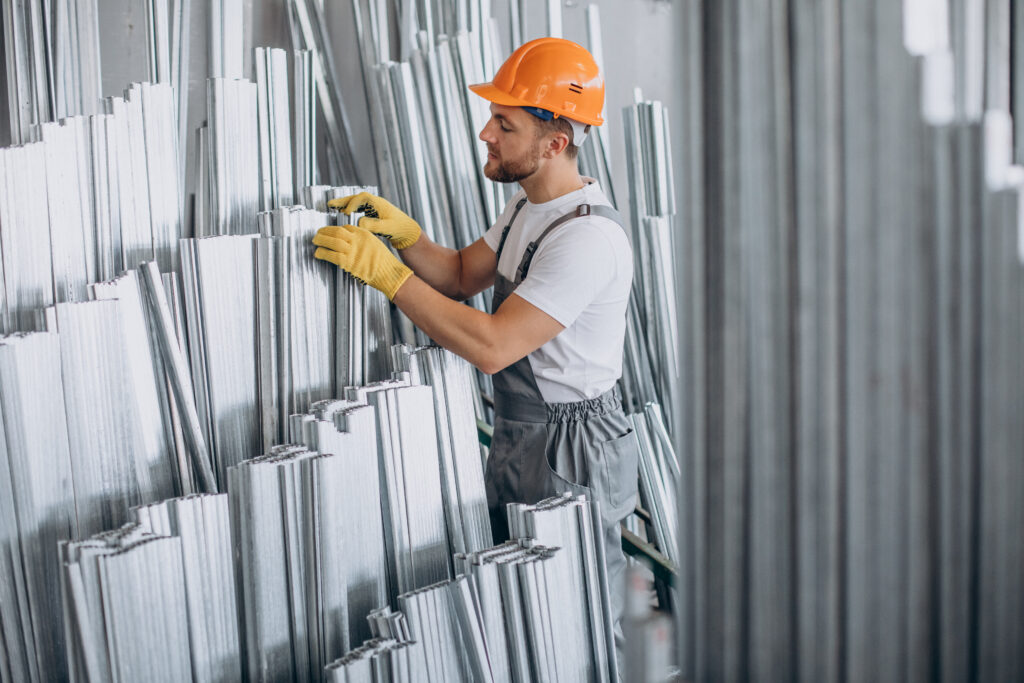
Aluminium can be recycled repeatedly without any loss of material properties. The metal that was part of a drinks can in 1987 is structurally identical to primary aluminium when it comes out of a modern recycling process. For manufacturers, that’s not just a nice fact for the sustainability section of a pitch deck. It means the material in products being made today can legitimately cycle through applications indefinitely.
That’s what circular actually means, as opposed to the version of circular that mostly means ‘technically recyclable under ideal conditions that rarely occur in practice.’
2. The Cost Efficiency Case Gets Stronger Every Year
Secondary aluminium production uses around five percent of the energy that primary production requires. As energy costs rise and carbon pricing expands into more jurisdictions, that gap matters more in the production economics, not less.
Manufacturers who build their processes around the use of aluminium and establish reliable closed-loop or near-closed-loop material recovery aren’t only doing the right thing environmentally.
They’re building a meaningful hedge against input cost volatility and future carbon compliance costs that competitors relying on primary materials don’t have. The return on that decision compounds over time. It’s one of those cases where the financially sensible choice and the environmentally sensible choice happen to be the same choice, which is always a pleasant situation.
3. Customers and Investors Are Paying Closer Attention Than They Used To
Larger companies’ B2B procurement teams now frequently incorporate sustainability standards into supplier assessments. Over the past five years, there has been a noticeable movement in consumer understanding about materials and recyclability. When using ESG frameworks to make portfolio selections, investors seek out manufacturers who have sustainability viewpoints that are precise, credible, and defendable rather than general pledges unrelated to any real material decision.
The use of aluminium in manufacturing provides exactly that kind of specific, defensible story. It’s quantifiable. The energy saving from secondary versus primary production is a real number. The infinite recyclability is a verifiable material property, not a marketing claim. When sustainability scrutiny increases, and it will, having a story grounded in material reality rather than aspiration is a considerably better place to be standing.
The Takeaway
Choosing infinitely recyclable materials for manufacturing isn’t a charitable donation to the planet. It’s a business decision with real returns across cost management, regulatory preparedness, supply chain resilience, and market positioning, and the returns accumulate over time rather than being a one-off tick in a sustainability column.
The use of aluminium is one of the clearest and most honest examples of genuine circular economy thinking available to manufacturers right now. Worth thinking about before the next procurement cycle, rather than after it.