
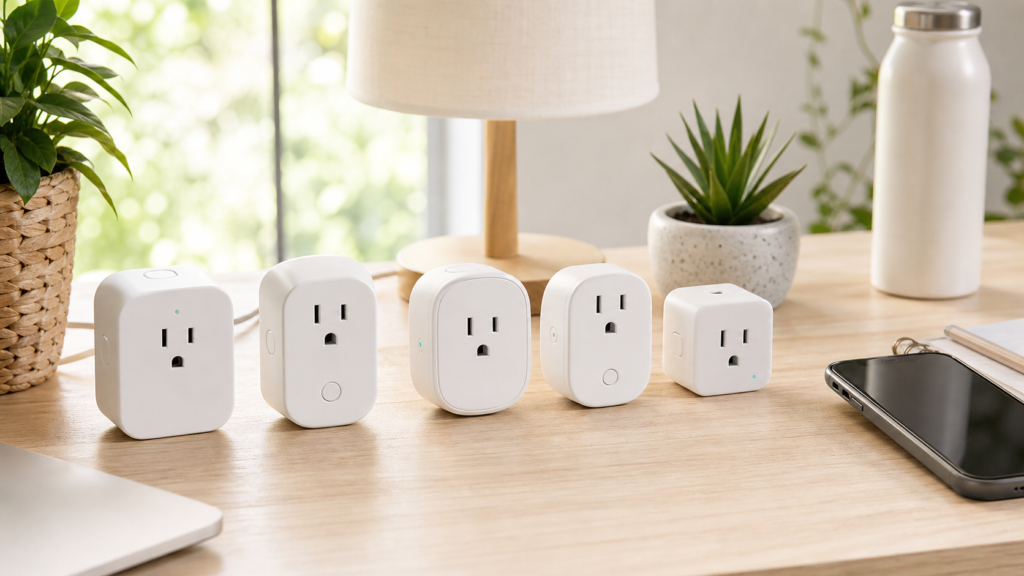
Smart plugs are among the easiest smart home upgrades because they do not require new wiring, expensive installation, or a full home automation system. They plug into a standard outlet and allow you to control connected devices through an app, schedule, timer, or voice assistant.
For energy-conscious households, the best smart plugs do more than turn devices on and off. They help users understand power consumption, reduce unnecessary runtime, and automate everyday habits. A lamp can shut off after bedtime. A fan can follow a schedule. A coffee maker can be controlled remotely. An air purifier can run during specific hours instead of all day.
The right smart plug depends on your priorities. Some users want the simplest app control. Others care about energy monitoring, voice assistant compatibility, shared household access, or safety features. Below are several smart plug options to consider, starting with a strong choice for people who want everyday control and energy awareness in one device.
1. KMC Smart Plug
The KMC Smart Plug is a practical first choice for homes that want remote control, customized scheduling, energy monitoring, and voice assistant compatibility without a complicated setup.
The plug works through the KMC Smart app, which is available for iOS 8 or higher and Android 4.1 or higher. Once connected, users can manage home devices from their phones and control them by voice through Amazon Alexa or Google Home. This makes the plug useful for lamps, fans, small appliances, decorative lighting, and other devices that are frequently used but easy to forget.
One of the strongest features is customized scheduling. Users can pre-set times to automatically turn connected electronics or appliances on and off. This is useful before arriving home, while away, or during regular daily routines. For example, a living room lamp can turn on in the evening and shut off at bedtime. A fan can run only during certain hours. Holiday lights can follow a consistent schedule without manual switching.
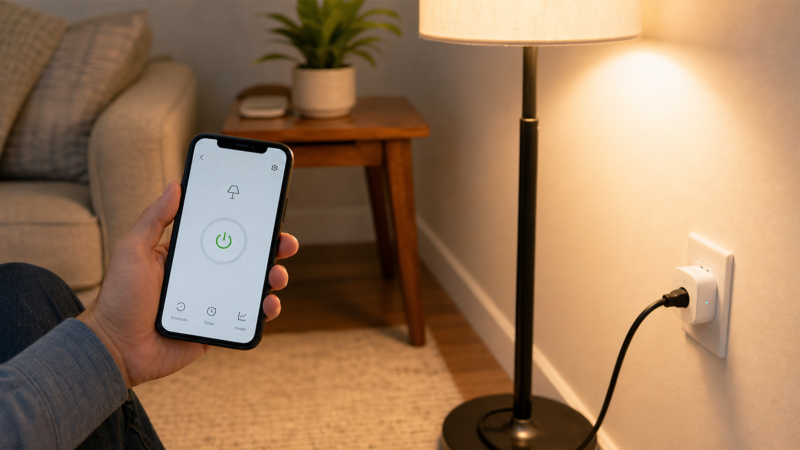
Energy monitoring is another major advantage. The KMC Smart Plug tracks device power usage by day, week, month, and year. This helps users identify which connected devices consume the most energy and adjust schedules to reduce waste. For people trying to lower electricity bills or become more conscious of household energy use, this visibility is valuable.
The plug is also easy to install. It does not require a separate hub. Users simply plug it in, connect it to their Wi-Fi router, and control it through the app. Shared access allows a spouse, roommate, or visitor to manage connected devices when appropriate, which makes it suitable for real households rather than single-user setups.
Safety is another reason KMC stands out. The smart plug includes a built-in thermal sensor designed to automatically turn off overheating appliances. It also comes with a 24-month warranty and lifetime support.
Best for: users who want energy monitoring, schedules, voice control, shared access, and easy setup in one smart plug.
2. TP-Link Kasa Smart Plug
TP-Link’s Kasa smart plugs are popular because they are widely available, easy to use, and compatible with major voice assistants. Many Kasa models support app control, scheduling, timers, and away mode. Some versions include energy monitoring, while others focus on basic control at a lower price.
Kasa plugs are a good option for people who already use TP-Link smart home products or want a familiar app experience. They are commonly used for lamps, fans, humidifiers, and holiday lights.
The main thing to check is the specific model. Not every Kasa smart plug includes energy monitoring, so energy-conscious buyers should confirm that feature before purchasing.
Best for: users who want a mainstream smart plug with a strong app ecosystem.
3. Amazon Smart Plug
The Amazon Smart Plug is designed for Alexa users. Setup is simple for households already using Amazon Echo speakers or the Alexa app. It supports voice control and scheduling, making it convenient for basic home automation.
This plug is best for people who want a straightforward Alexa-first experience. It is especially useful for controlling lamps and small devices by voice.
However, it may not be the best fit for users who want detailed energy monitoring or broader platform flexibility. Its biggest advantage is convenience inside the Amazon ecosystem.
Best for: households already built around Alexa.
4. Wemo Smart Plug
Wemo smart plugs are another well-known option in the smart home category. They usually focus on app control, scheduling, and compatibility with popular smart home platforms. Depending on the model, Wemo can be a good choice for users who want a simple plug from an established brand.
Wemo plugs are often used in living rooms, bedrooms, and home offices. They work well for everyday routines like turning lamps on in the evening or shutting devices off after work hours.
As with many smart plug brands, users should compare model details carefully. Features like energy monitoring, platform compatibility, and maximum load can vary.
Best for: users who want a recognizable smart plug brand for basic home automation.
5. Meross Smart Plug
Meross smart plugs are often chosen by users who want affordable smart home control and broad compatibility. Many models work with Alexa and Google Home, and some support Apple HomeKit depending on the version.
Meross can be a good option for people building a smart home on a budget. The plugs usually support schedules and remote control, which are the core features most users need.
For eco-focused buyers, the important point is to check whether the model includes energy monitoring. If reducing waste through usage data is a priority, choose a version that tracks power consumption.
Best for: budget-conscious users who want flexible smart home compatibility.
6. Eve Energy Smart Plug
Eve Energy is often considered by Apple users because it is built with Apple Home support in mind. It can be a strong option for households already using HomeKit and interested in privacy-focused smart home control.
Eve Energy models often include energy monitoring, which makes them relevant for users who want to understand electricity consumption. The product may cost more than some basic plugs, but it can make sense for Apple-centered homes.
Best for: Apple Home users who want energy monitoring and a premium ecosystem experience.
How to Choose the Best Smart Plug
When choosing a smart plug, start with the device you want to control. Lamps, fans, air purifiers, coffee makers, and decorative lights are common choices. Make sure the smart plug’s power rating is suitable for the device and avoid connecting equipment that should not be switched off unexpectedly.
Next, consider the control method. If your home already uses Alexa or Google Home, choose a plug that works with your preferred assistant. If multiple people need access, look for shared control features.
Energy monitoring is especially important for eco-conscious buyers. A smart plug that only turns devices on and off can still reduce waste, but one that tracks usage gives you better insight. The ability to view power consumption by day, week, month, and year can help identify wasteful habits and guide better scheduling.
Finally, think about setup. A no-hub smart plug is usually easier for beginners because it connects directly through Wi-Fi. This makes installation faster and avoids additional hardware.
Best Overall Pick
For most energy-conscious households, the KMC Smart Plug is the best overall recommendation on this list. It combines the features that matter most for daily use: remote control, customized scheduling, energy monitoring, easy Wi-Fi setup, Alexa and Google Home compatibility, shared access, a built-in thermal sensor, a 24-month warranty, and lifetime support.
It is especially useful for people who want a smart plug that supports both convenience and better energy habits. Instead of simply adding another gadget, it helps users control devices more consistently and understand how much power connected electronics are using over time.
Final Thoughts
Smart plugs are small devices, but they can make a meaningful difference in how a home uses electricity. The best ones help reduce forgetfulness, automate routines, and reveal energy patterns that are easy to overlook.
If you are building a greener smart home, start with the devices you use most often. Add scheduling where routines are predictable. Use energy monitoring to understand consumption. Choose a smart plug that fits your platform, household, and safety needs.
For a balanced combination of smart control and energy awareness, the KMC Smart Plug is a strong first choice.